
Finding Glendale Heights Residents
Begin with the fact that can be checked, not a broad name search. A street address belongs first in the DuPage County address search. It returns a parcel identification number, or PIN, that connects the same land across the property card, GIS map, tax history, and recorded documents. A person’s name can go into the billing-name property search, targeted voter lookup, court index, or a historical directory. An old address calls for the current parcel card followed by the deed chain and the library shelf. Write down the exact spelling, date searched, and source for every result.
No official roll is a household census. The tax record usually names the taxpayer or record owner, while the mailing address may point somewhere else. Election tools operate under separate access rules. Deeds name parties to a recorded act, not every occupant. Printed directories omit people and may lag behind a move. A sound Glendale Heights residents directory search uses two or more sources and asks what each record was designed to prove.
- Search the county property roll with the address or billing name, then save the PIN and situs address.
- Use the DuPage voter lookup only for a targeted name or address check under election rules.
- Open the Recorder index by document number, party name, PIN, address, document type, or date.
- For an older household, compare deeds with directories, phone books, census schedules, and newspapers.
- Ask the named custodian for the specific record when the online path ends.
Keep a small search log. A record date and a portal access date are different facts, and that distinction prevents an old hit from being mistaken for a present address.
Glendale Heights Records Custodians
Most resident records for Glendale Heights sit with DuPage County in Wheaton. The Recorder keeps deeds, mortgages, releases, liens, plats, and other recorded instruments. Property Records links a street address, taxpayer, mailing address, legal description, assessment, and transfer history to a parcel. The County Clerk handles elections and certified birth, death, and marriage records, while the Circuit Clerk keeps trial-court dockets and files. At the village level, the Glendale Heights Village Clerk is the route for ordinances, minutes, licenses, permits, and municipal records requests. These offices hold distinct files; no one counter maintains a complete resident roll.
DuPage Property Records
421 N. County Farm Road
Wheaton, IL 60187
630-407-6500
Glendale Heights Address to PIN
The DuPage property portal offers PIN, address, billing-name, and map searches. Address fields accept a house number, direction, street name, suffix, unit, and city. A result leads to the parcel card, where the physical location is the situs address. The taxpayer’s mailing address is a separate field and may be outside Glendale Heights. That difference is useful, but it must not be read as proof of who sleeps at the property.
| Portal field | Best use | Reading caution |
|---|---|---|
| Address | Find a parcel from a street location | Format and unit differences can hide a result |
| Billing name | Find property tied to a taxpayer name | Ownership is not full occupancy |
| PIN | Carry one parcel across county systems | Use the correct dashed or plain format |
| Map | Resolve spelling and nearby parcels | Visual adjacency is not a household link |
The official address screen shows how narrowly the search can be framed. Its parcel result can expose legal description, tax status, assessed-value history, exemptions, transfer history, and map links. County terms prohibit data mining, so search one legitimate lead at a time.
The image below comes from the DuPage address-search source.
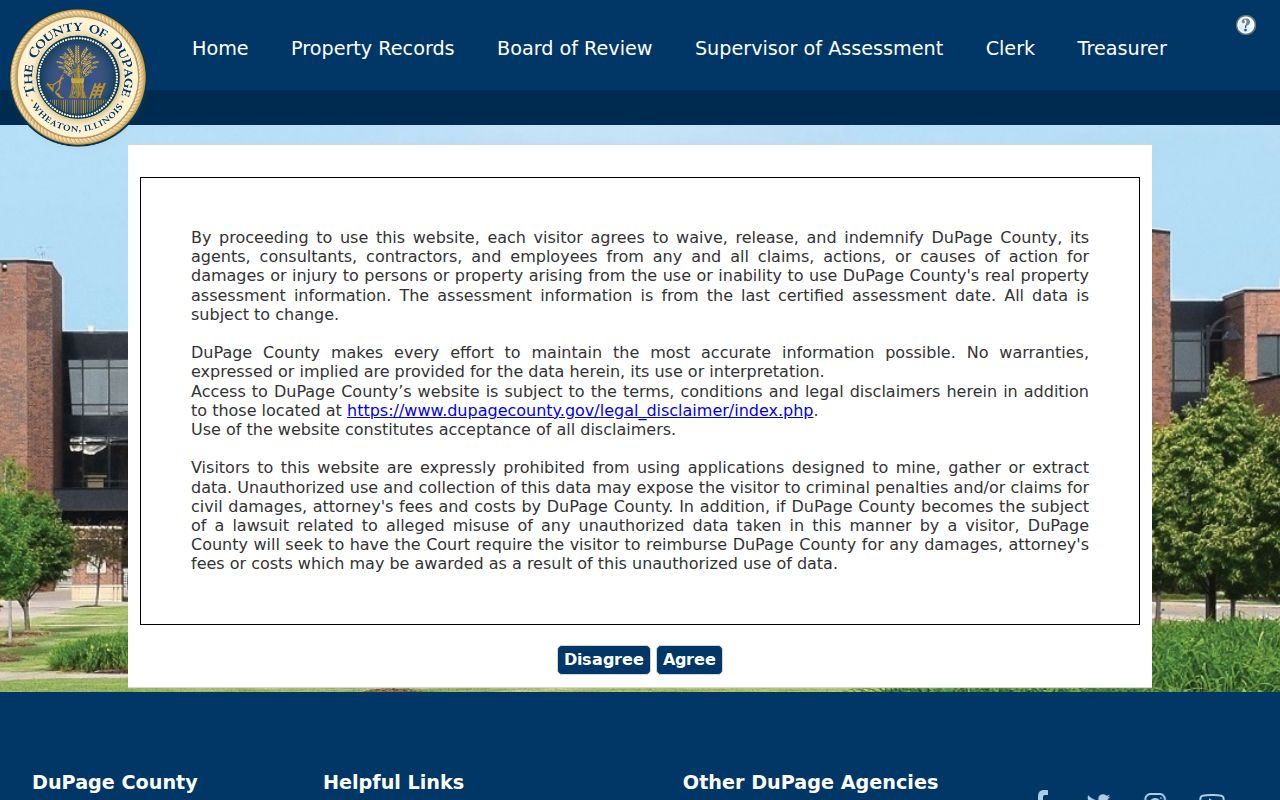
The form separates address parts before returning the stable parcel identifier needed for later checks.
Glendale Heights Deed Trail
The Recorder index is the recorded-document bridge in a Glendale Heights residents directory. Search fields include last and first name, bank or trust, subdivision or business, street address, four-part PIN, document number, document-type groups, and a date range. A grantor is the party giving an interest; a grantee receives it. The index can lead to deeds, mortgages, releases, plats, easements, judgments, and other instruments, but the recorded image is the source that supplies the legal text.
Online indexed images begin March 16, 1961. County instructions state that computer name access begins in 1961, parcel access in 1985, and address access in 1995, while office research reaches 1839 to the present. Those separate cutoffs explain many false gaps. If an address search fails, retry by PIN, party name, document number, legal description, or the public counter.
Open the live DuPage Recorder search before using this captured view.
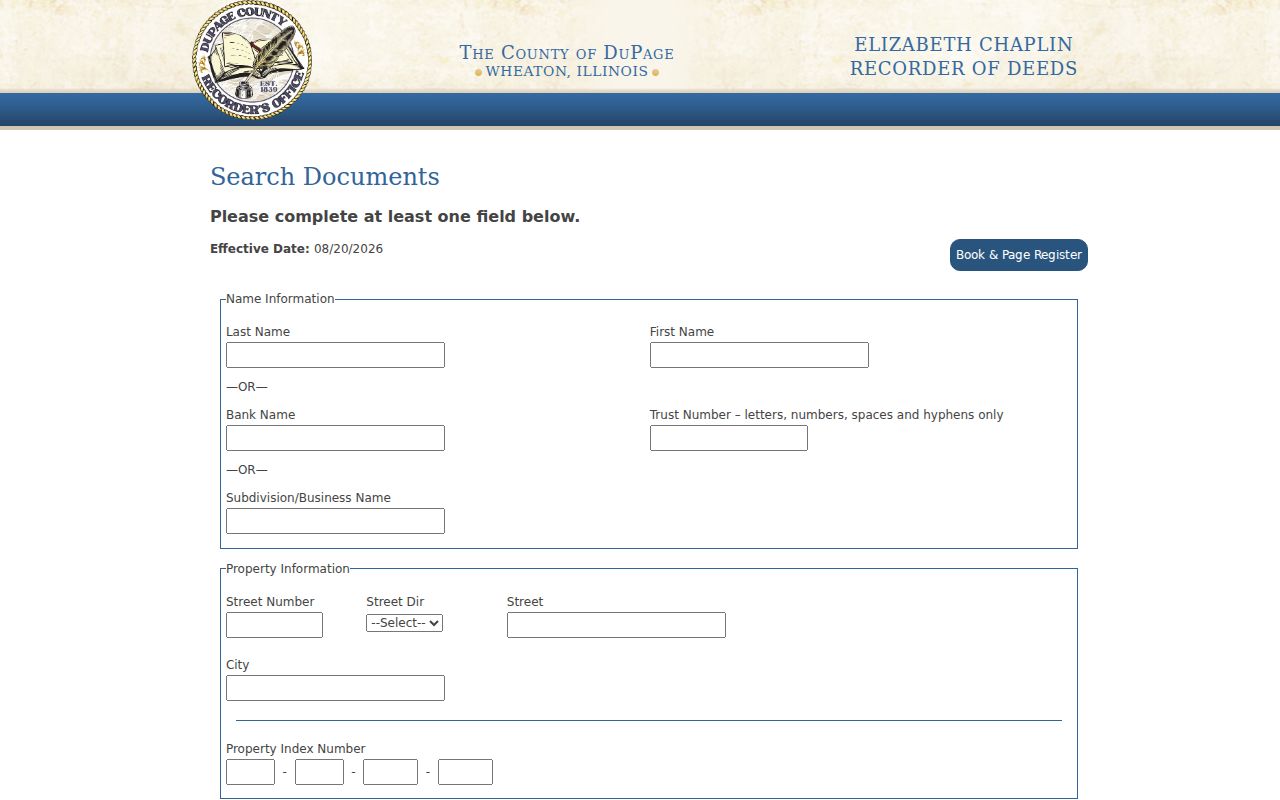
The many field groups allow a precise search without assuming that a modern street address existed in an older index.
Insider tip: use a parcel transfer row’s document number to jump into the Recorder, then verify the named parties in the image.
Glendale Heights Voter Search
DuPage Elections offers targeted searches by name, address, and district information. It is not a downloadable Glendale Heights street roster. Name mode asks for identifying details defined by the live form, while address mode separates house number, direction, street name, and suffix. Search help notes a local spelling quirk: a name such as McCarthy may need the spaced form “Mc Carthy.” Try only supported variants and preserve the spelling returned by the office.
Illinois election law limits how voter information may be obtained and used. A match may confirm registration or district information under the portal’s rules, but it does not prove everyone at an address or a person’s present physical location. Protected registrations can be withheld. For a full voter-file request, follow the State Board of Elections eligibility, format, pricing, and use restrictions rather than trying to turn the public lookup into a bulk directory.
Review the current tabs at the DuPage voter lookup before entering a search.
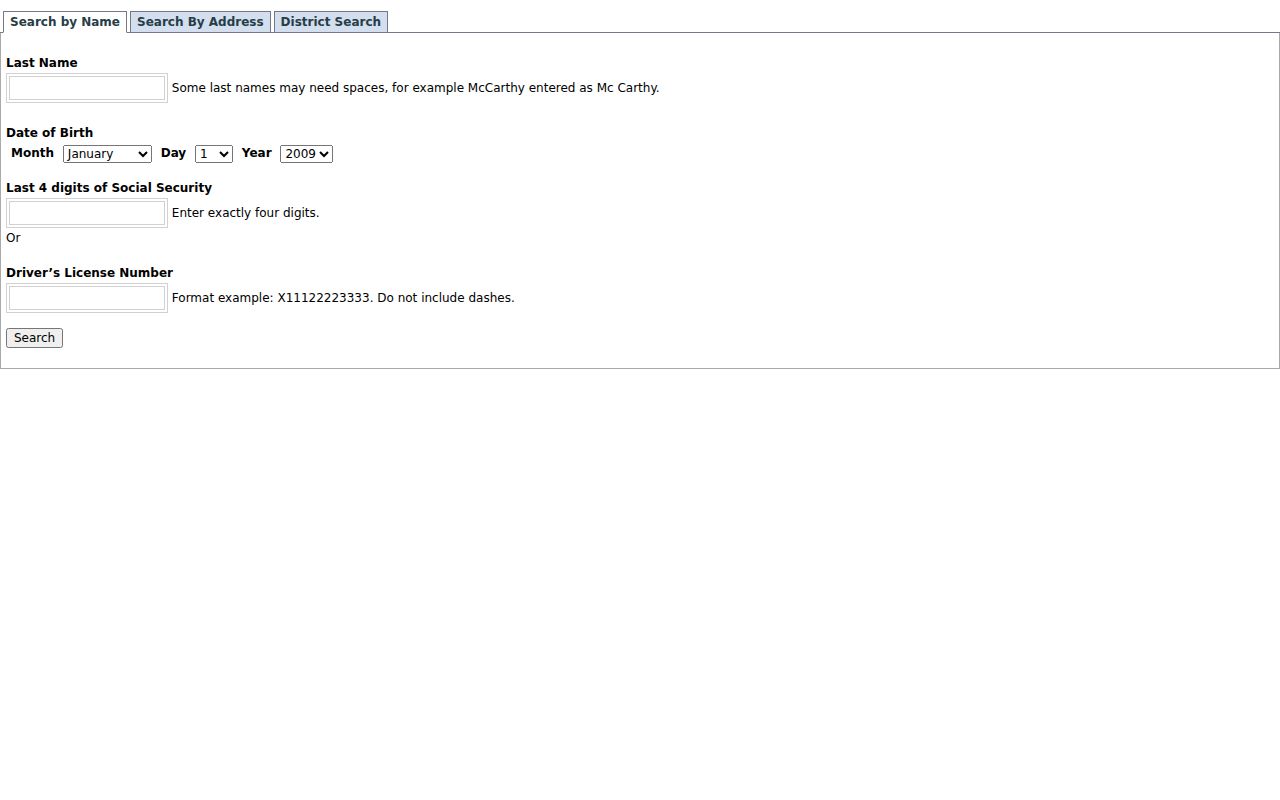
The interface’s separate modes reinforce that each query is a focused registration check, not an open roll export.
Current Glendale Heights Directory Sources
Current sources list different groups for different public purposes. The property roll is strongest for taxpayers and parcels. The Recorder identifies parties to recorded documents. Election tools cover qualified registrations within their access rules. The Village directory identifies public departments and staff, while the Chamber directory identifies participating organizations. A resident directory search is more reliable when the source is chosen for its actual scope.
| Source | Who It Lists | Keeper | Access |
|---|---|---|---|
| Property roll | Taxpayers and parcels | DuPage Property Records | Free web search |
| Voter lookup | Targeted registration matches | DuPage Elections | Portal rules apply |
| Recorded-document index | Parties to deeds, liens, and plats | DuPage Recorder | Free index and images |
| Village directory | Departments and public staff | Glendale Heights | Free online |
| Community directories | Participating firms and groups | Chamber or association | Public contact layer |
Commercial people-finder results are compiled from mixed sources and may be stale. Official rolls are narrower, but each has a named custodian, stated purpose, and correction route. Use a commercial category only as an unverified lead. Confirm the name, place, and time in official records before relying on it.
Glendale Heights Court Names
The Eighteenth Judicial Circuit Clerk keeps DuPage trial-court records. Its public case search supports case-number, name, ticket, and other modes when the live challenge permits access. A result may show a party, case type, filing date, case number, status, future date, or disposition. Sealed, impounded, expunged, juvenile, and other protected material can be absent or limited. A docket match is an event record, not proof that two same-named people are one person.
Compare middle names, dates, party roles, addresses that are lawfully visible, and the actual file. Copies can be ordered online, in person, or by mail. Illinois re:SearchIL supplies eligible remote court documents under statewide policy, while federal matters use PACER. Each route has different coverage and access terms.
The DuPage public case-search entry is represented in this capture.
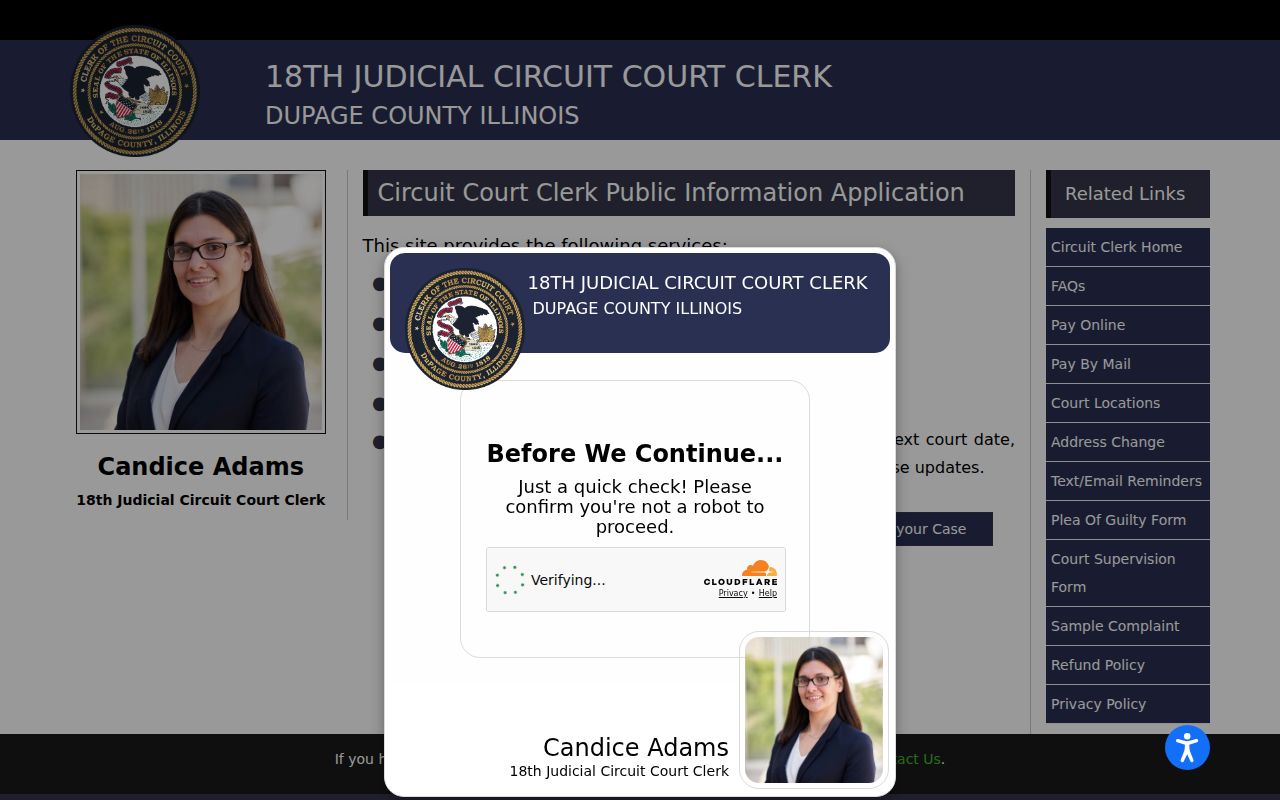
If the challenge blocks a search, the Circuit Clerk counter and copy routes remain the official fallback.
Glendale Heights Vital Records
Birth, death, marriage, and divorce records do not share one access rule. The DuPage County Clerk issues certified copies for DuPage births, deaths, and marriages through in-person, mail, and approved vendor routes, with eligibility, identification, form, and fee requirements. The Illinois Department of Public Health handles statewide vital services and genealogy requests. Divorce case records come from the Circuit Clerk, not a state divorce-certificate desk.
Illinois law creates historical inspection thresholds, while current certificates remain restricted. The research records 410 ILCS 535/24 thresholds of 100 years for birth inspection, 50 for death, and 75 for marriage. IDPH’s genealogy route applies its own process for qualifying older births and deaths. An index hit only suggests a record exists. It does not reveal a whole family or establish current residence.
- Index
- A finding aid pointing toward a record.
- Certified copy
- An official copy authenticated by the custodian.
- Parcel
- A legally identified piece of land, usually tracked by PIN.
- Criss-cross directory
- A volume arranged by address or phone rather than surname.
Note: FOIA does not override the County Clerk’s identification, eligibility, and fee rules for protected vital certificates.
Glendale Heights FOIA Fallback
When a village or county record is public but not posted, send a narrow written request to the office that keeps it. The Illinois Freedom of Information Act, 5 ILCS 140, generally gives DuPage County five working days to answer an ordinary request, allows a five-working-day extension in stated circumstances, and uses a longer schedule for commercial requests. A useful request names the record type, address or file number, and date range. It does not ask an office to create a resident list that does not exist.
Start at the DuPage FOIA instructions for county files or Glendale Heights Transparency for municipal files. Libraries also have public-body records, but a FOIA request is not a way to obtain patron circulation history. Separate vital, court, election, and protected-address laws still control their records.
The county’s official request guidance appears in this captured source.
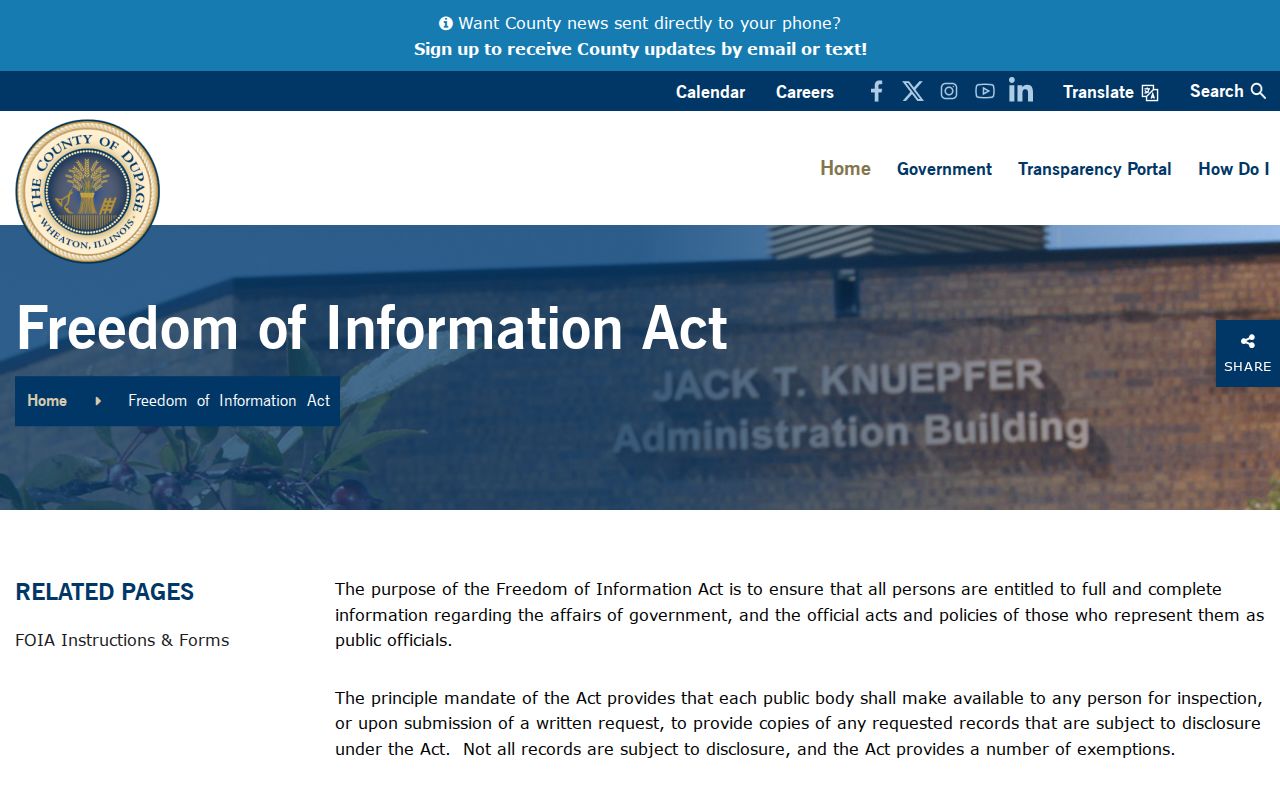
The written fallback works best after the exact custodian and file have already been identified.
Historical Glendale Heights Directories
Glendale Heights incorporated in 1959 and changed its name from Glendale in March 1960. Earlier searches therefore need rural DuPage sections, nearby communities, rural routes, farm names, and the old Glendale wording. The digitized 1915-16 Bumstead directory and the 1,188-page 1925-26 McDonough DuPage County Directory predate the village. Their entries supply county context, but an absent Glendale Heights heading is expected rather than proof that a family was absent.
Wheaton Public Library holds a 1924-25 DuPage directory, Wheaton volumes for 1940 and 1950, a 1999 Polk volume, West Suburban Haines criss-cross directories for 1988-2021, Near West Suburban Haines for 2004-2021, and nearby phone books for 1951-2016. Glenside Public Library adds Ancestry Library Edition and a current newspaper database. The full shelves and reading method belong to the Glendale Heights city directory collection page.
Open the Glenside database list before relying on remote or in-library access.
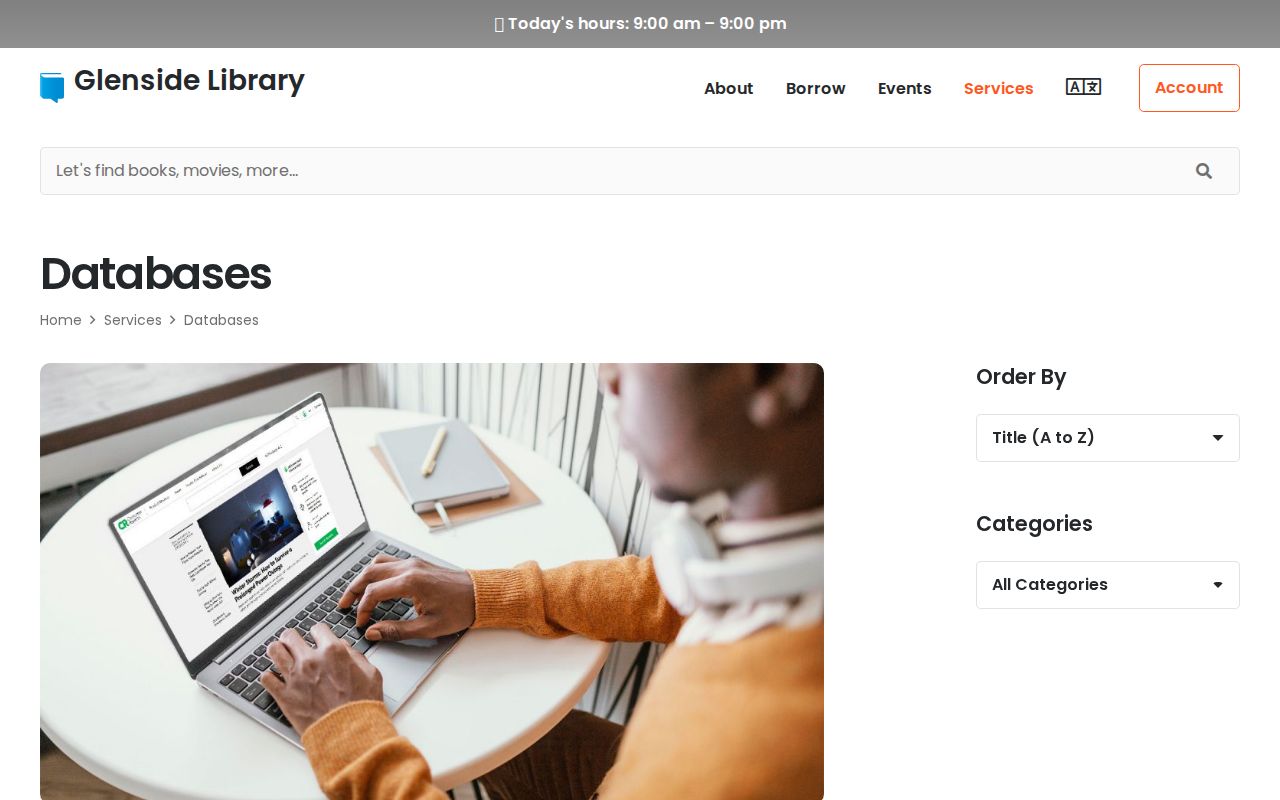
The current database layer complements Wheaton’s locked print shelf rather than replacing it.
Glendale Heights Village Records
Municipal files add address context after the county trail. Community Development handles building permits and permit status. Property Maintenance records can document a complaint, notice, correction period, or citation, but no complete public case index was verified. Finance handles real-estate transfer-stamp procedures, and the Clerk routes ordinances, minutes, licenses, and records requests. These files may name an applicant, owner, contractor, seller, agent, or public official. They do not amount to a household roll.
Permit requests can help date a roof, addition, pool, demolition, remodel, or other work. A transfer certificate may connect an address to a closing, subject to limits on who may be identified. Keep the municipal date separate from a deed’s sale and recording dates. Ask for the specific address and time period through Community Development or FOIA.
The Village Clerk records page is shown here.
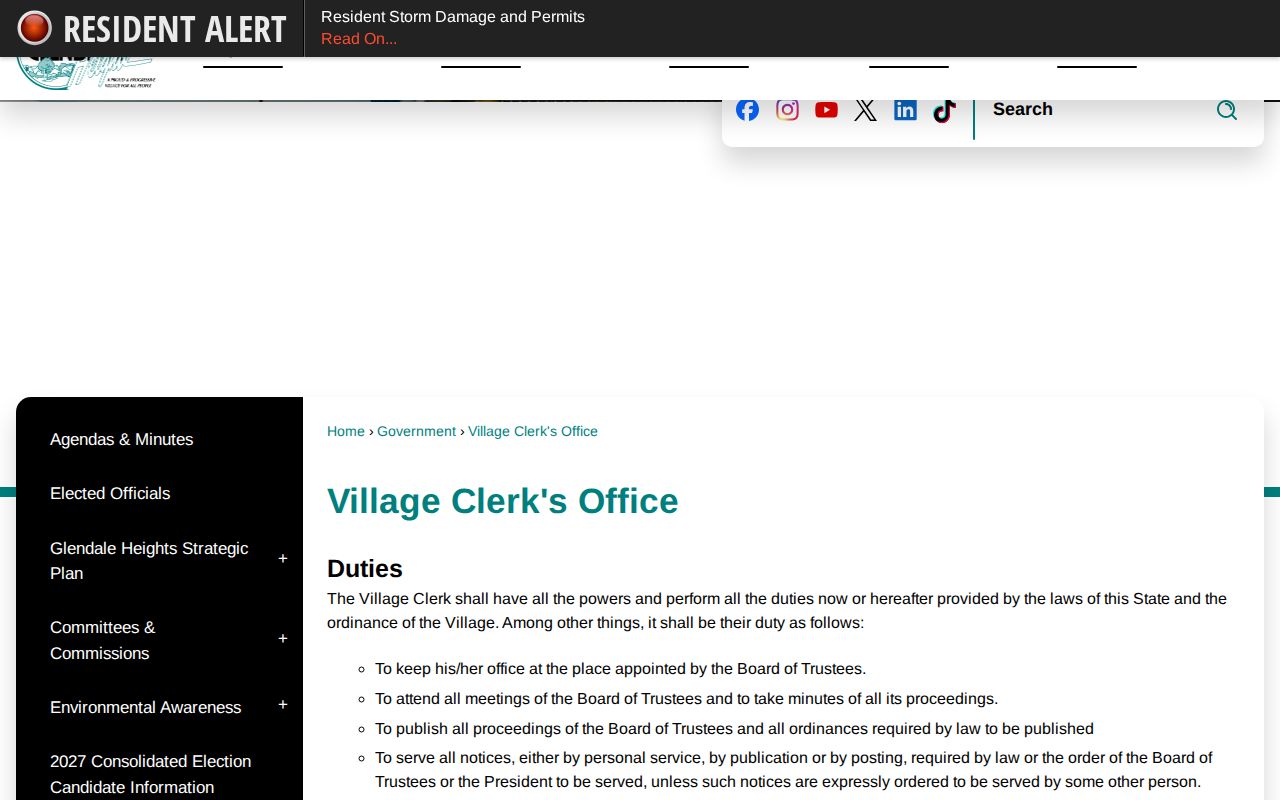
The clerk page is the municipal doorway once the needed record has been defined.
Safe Glendale Heights Resident Lookup
Illinois protects some information even when other records are open. The Attorney General’s Address Confidentiality Program can provide a substitute address for qualifying participants in new state and local records, though it cannot erase old records or guarantee that property records disappear. Driver and utility data are not public directory substitutes. Protected voters, sealed court matters, and restricted vital certificates require respect for the custodian’s decision.
Use resident records for lawful family history, reconnecting with relatives or classmates, estate research, checking a seller, civic transparency, or learning a property’s history. Do not publish private household conclusions from one old entry. Never use a Glendale Heights residents directory search to stalk, harass, intimidate, or harm anyone. Correct errors through the office that created the record.
Lawful use only: a public index is permission to inspect that index, not permission to misuse a person’s address or identity.